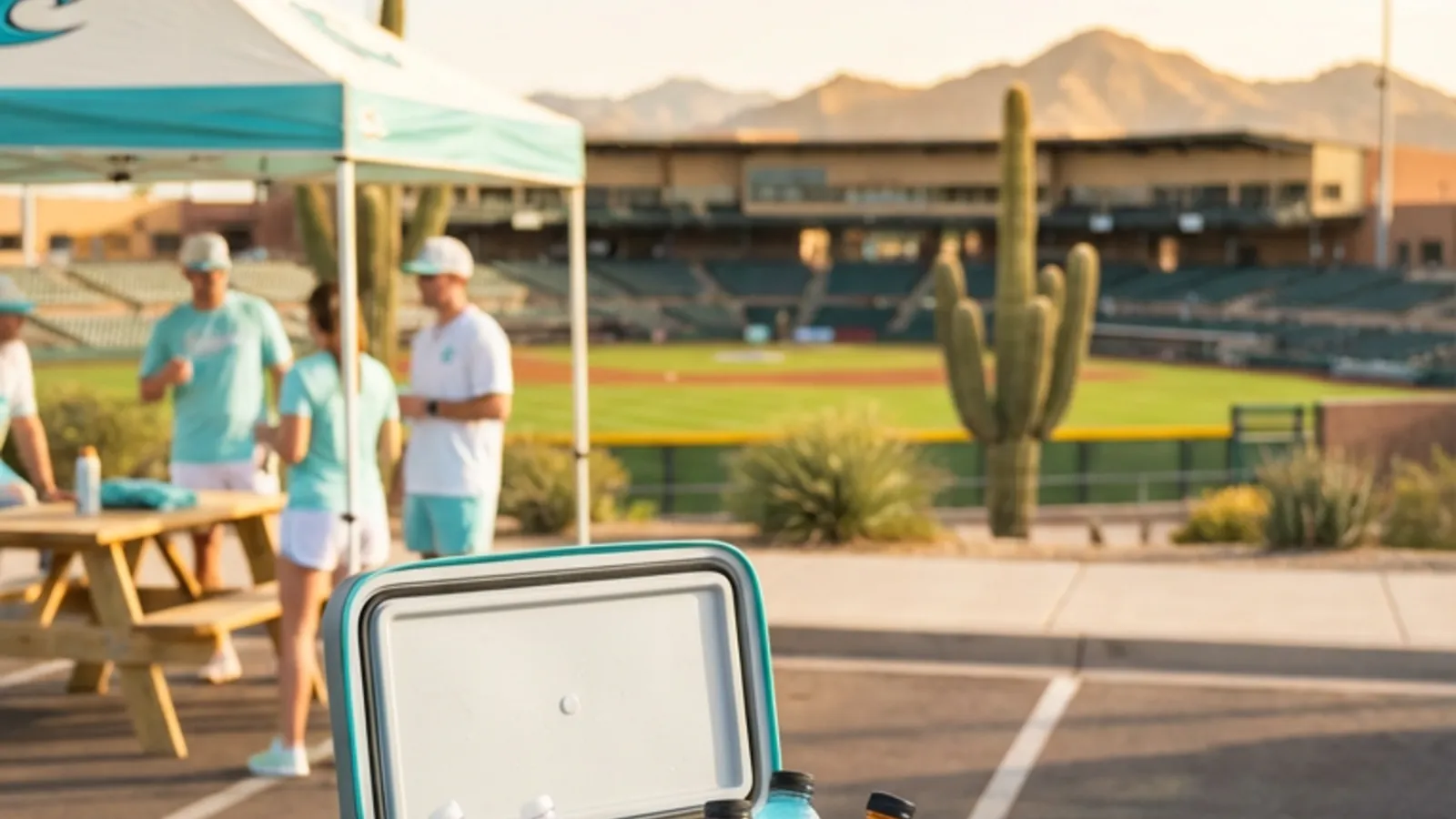
Spring Training Recovery: Your Cactus League Survival Guide
Spring training recovery in Arizona's East Valley requires replacing both fluids and electrolytes lost to desert heat and alcohol. Electrolyte drinks, rest, and bland food handle mild cases. For fans dealing with multi-day Cactus League dehydration, mobile IV therapy delivers saline and vitamins directly to your hotel room or Airbnb starting at $149.
The Cactus League brings roughly 1.2 million fans to Arizona every spring. About 65 percent fly in from out of state -- Chicago, Denver, San Francisco -- where the air is cooler and more humid. Then they spend eight hours at Sloan Park or Salt River Fields drinking beer in the March sun, and the next morning they learn what Arizona does to a body that isn't prepared.
If you're reading this from a hotel room in Mesa or an Airbnb in Gilbert, wondering why you feel ten times worse than a normal hangover, this guide is for you. How to recover from spring training in the East Valley, what actually works, and what to skip.
Why spring training wrecks out-of-state fans
Most visitors don't realize how different March feels in Arizona compared to wherever they flew in from. Daytime temperatures in the East Valley regularly hit the mid-80s. Humidity hovers around 10 to 20 percent. That bone-dry air pulls moisture from your skin and lungs faster than you notice, and the effects stack.
If you went through something similar during the WM Phoenix Open last month, you already know the pattern.
Your body loses fluid from two directions at once during a Cactus League game. Alcohol suppresses vasopressin, the hormone that tells your kidneys to retain water, so you urinate more often. Meanwhile, Arizona's dry heat pulls moisture through your skin and respiratory system at a rate that would never happen in Chicago or Seattle. These two effects compound, creating dehydration far worse than the same amount of drinking in a humid climate.
The real problem for spring training fans is the multi-day factor. Most people aren't here for one game. Cubs on Friday, A's on Saturday, maybe Diamondbacks on Sunday. Each day you go out, your body starts more depleted than the day before. By day three, a couple of beers can wreck you because you never fully rehydrated between games.
What a day at the ballpark does to your body
A hangover is more than dehydration. When you drink, your liver breaks alcohol into acetaldehyde, a toxic compound that takes time to clear. That process burns through B vitamins and other nutrients. The Cleveland Clinic notes that alcohol also triggers an inflammatory response -- headache, muscle aches, fatigue.
A day in the Arizona sun piles on more. You're sweating out electrolytes -- sodium, potassium, magnesium -- that your body needs to absorb and retain fluids. Lose enough of them and plain water passes right through you.
Stack it up: liver processing a toxin, electrolytes drained, B vitamins depleted, inflammatory response firing, baseline dehydration from hours in dry desert air. That's why a spring training hangover can put you on the couch for an entire day when the same drinking back home would have been a mild headache by noon.
Your spring training recovery playbook
Before anything that costs money, here is what you can do right now with whatever you have in your hotel room or rental.
1. Hydrate with electrolytes, not just water. Plain water helps, but your body also needs sodium, potassium, and magnesium to absorb and retain that fluid. Grab a Pedialyte from the nearest Walgreens, mix in an electrolyte packet, or pick up a sports drink. Makes a bigger difference than sipping plain water all morning.
2. Eat something simple. Your stomach is probably not ready for a big breakfast. Eggs are a good option -- they contain cysteine, an amino acid that helps break down acetaldehyde. Bananas replace potassium. Toast or crackers stabilize blood sugar. Keep it bland.
3. Take ibuprofen, not Tylenol. Acetaminophen is processed by your liver, which is already working hard to clear alcohol. Ibuprofen reduces inflammation through a different pathway and is safer for hangover headaches. Take it with food.
4. Sleep. If you don't have a game until the afternoon, get more rest. Your body does its best repair work during sleep. No shortcut replaces it.
What to skip: Hair of the dog delays the hangover and adds more liver work. Coffee on an empty stomach is another diuretic that worsens dehydration. Don't "sweat it out" at the hotel gym when you're already running low on fluids.
These steps are free, practical, and will get most people through a moderate hangover in 12 to 24 hours. If you need to recover faster or can't keep fluids down, keep reading.
Staying ahead when you have another game tomorrow
If you're here for multiple days, prevention between games is the real move. You can't control how you feel this morning, but you can set up a better tomorrow.
Alternate every drink with water. More restroom trips at the stadium, yes. But you'll enjoy the next game instead of watching it through sunglasses and a headache.
Bring electrolyte packets. Toss two or three in your pocket before the ballpark. Mix them into water throughout the day. Cheapest thing you can do to reduce how bad you feel the next morning.
Eat a real meal before the game. Solid breakfast or lunch with protein and carbs slows alcohol absorption. Going to the stadium on an empty stomach is one of the fastest ways to ruin your evening.
Find shade when you can. Not every seat at Sloan Park or Hohokam has cover, but reducing direct sun exposure by even an hour makes a measurable difference in fluid loss.
Start evening recovery early. When you get back from the game, drink a full glass of water with electrolytes before anything else. Don't wait until bedtime. The earlier you start replacing what you lost, the less you'll feel it in the morning.
How IV therapy speeds up spring training recovery
When you drink fluids by mouth, your digestive system absorbs roughly 20 to 50 percent of what you take in. With a hangover stomach, that number drops further because nausea makes it hard to keep anything down. IV hydration bypasses your gut entirely, delivering fluids and nutrients straight into your bloodstream at 100 percent absorption.
A typical hangover IV treatment includes one liter of IV fluids, B-complex vitamins to replace what alcohol depleted, vitamin C, and anti-nausea medication. Optional add-ons like Toradol can address headache and body aches.
Here is how the two approaches compare:
| Home Remedies | IV Therapy | |
|---|---|---|
| Fluid absorption | 20-50% (less when nauseous) | 100% directly to bloodstream |
| Time to feel better | 12-24 hours | Many clients report improvement in 30 minutes |
| Nausea relief | Wait it out | Anti-nausea medication included |
| Vitamin replacement | Eat and hope you keep it down | B vitamins and vitamin C delivered directly |
| Effort required | Constant sipping and snacking | Relax for 30-45 minutes |
IV therapy is not a cure-all. But many of our clients say it cuts their recovery from a full day to a couple of hours. When you have tickets to tomorrow's game, that matters. For a full breakdown of costs across Arizona, see our guide to mobile IV therapy pricing.
Your Cactus League recovery timeline
Here is how it typically plays out during spring training season.
Single game day. Cubs game yesterday, great time, now you feel terrible. Book a morning IV and a provider arrives at your hotel or rental in about 30 to 45 minutes. Treatment takes another 30 to 45 minutes. Most clients are back on their feet by lunch.
Weekend warrior. Three games in three days. Book a mid-trip recovery session -- maybe Saturday morning before the afternoon game -- so you can rally without carrying two days of dehydration into day three.
Full week trip. Some fans come out for the full Cactus League experience. Five or six days of games and nightlife. A couple of strategically timed IV sessions keep you from hitting the wall on day four.
Group bookings. Whole crew staying at the same rental in Mesa or Gilbert? We treat everyone at the same location. Popular option for friend groups, fantasy baseball leagues, and bachelor parties that build their trip around spring training.
East Valley Stadiums and RevivaGo Coverage
The East Valley is Cactus League country. Several stadiums sit right in RevivaGo's service area, which means we can be at your door faster than you'd expect.
Sloan Park (Chicago Cubs) in Mesa is about 25 minutes from Queen Creek and sits right in the middle of our coverage area.
Hohokam Stadium (Oakland Athletics) is also in Mesa, roughly 25 minutes from Queen Creek.
Salt River Fields (Arizona Diamondbacks, Colorado Rockies) on the Salt River Pima-Maricopa Indian Community is about 35 minutes from our base.
Gilbert and San Tan Valley sit right between Queen Creek and the Mesa stadiums, making them ideal home bases for spring training visitors who want to be close to the action without Scottsdale hotel prices.
Vacation rental in Mesa, hotel in Gilbert, staying with friends in Queen Creek -- RevivaGo delivers. Our licensed providers (registered nurses, nurse practitioners, or paramedics) bring everything to your door. Every treatment runs under physician oversight with hospital-grade, sterile, single-use supplies.
For more on athletic recovery IV therapy in the East Valley, see our deeper article on the topic.
How do you stay hydrated at spring training in Arizona?
Alternate every alcoholic drink with a full glass of water and add electrolytes to your hydration routine. Bring electrolyte packets to the stadium, eat a solid meal with protein and carbs before the game, and find shade when you can. Arizona's dry air dehydrates you faster than humid climates, so you need more water here than at a Grapefruit League game in Florida. Starting recovery hydration as soon as you leave the stadium, not at bedtime, makes the biggest difference.
Can you get heat exhaustion at a Cactus League game?
Yes. March temperatures in the East Valley regularly reach the mid-80s, and direct sun plus alcohol plus hours of standing increases the risk. Warning signs: heavy sweating followed by reduced sweating, dizziness, nausea, rapid heartbeat, cool clammy skin despite the heat. If someone is confused, has stopped sweating, or loses consciousness, call 911. That may be heat stroke, which is a medical emergency. For milder symptoms like headache and fatigue, get out of the heat, rehydrate with electrolytes, and rest.
How long does it take to recover from a day of drinking in the desert?
Most hangovers resolve within 12 to 24 hours. In Arizona's dry climate, dehydration can stretch symptoms to 36 hours or longer if you don't actively rehydrate. Severity depends on how much you drank, whether you ate, how much direct sun you caught, and whether this was day one of drinking or day three. Starting electrolyte-focused hydration early shortens the timeline. Many clients who use IV hydration therapy report feeling significantly better within 30 minutes to an hour.
Is mobile IV therapy available near Cactus League stadiums?
Yes. RevivaGo covers the entire East Valley: Mesa, Gilbert, Queen Creek, San Tan Valley, Chandler, and Apache Junction. Most Cactus League venues are within 25 to 35 minutes. A licensed provider can be at your hotel, Airbnb, or rental home the same day you book. Browse our service menu for treatments and pricing.
How much does a hangover recovery IV cost?
RevivaGo's hangover IV is $179 with no travel fees in our service area. No hidden charges. Optional add-ons like Toradol for pain relief ($20) or extra hydration ($50) are available. For context, an urgent care visit for IV fluids runs $150 to $400 before copays, and an ER visit can hit $500 to $3,000 or more. Compare options in our mobile IV therapy vs. urgent care breakdown.
Ready to get back to the ballpark?
You didn't fly to Arizona to spend the day in a dark hotel room. RevivaGo brings spring training recovery to your door anywhere in the East Valley. Licensed providers, $179, no travel fees.
Book your recovery appointment and get back to the Cactus League. Browse our service menu to find the right treatment.
RevivaGo proudly serves Queen Creek, Gilbert, San Tan Valley, and the greater East Valley area. All treatments are administered by licensed healthcare professionals under physician oversight.