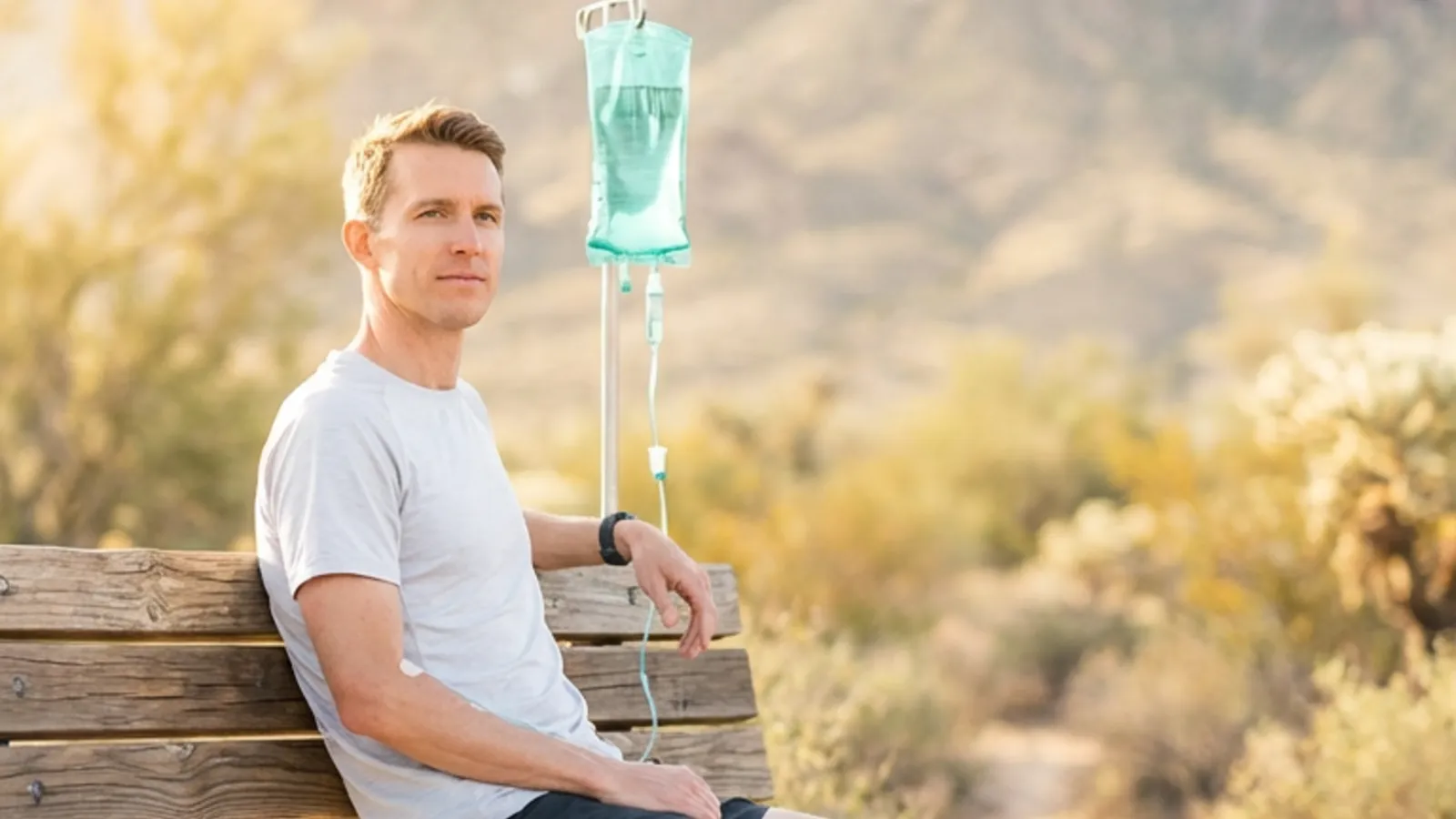
Marathon Recovery IV Therapy: East Valley Guide
Marathon recovery IV therapy delivers saline, electrolytes, B vitamins, and antioxidants directly into a runner's bloodstream after a race, bypassing the gut for near-100% absorption. It helps restore fluids, replenish depleted electrolytes, and reduce recovery time, especially in Arizona's dry climate where runners lose more fluids than they realize during 26.2 miles.
You trained for months, ran 26.2 miles, and now you can barely walk to the kitchen. If you ran the Mesa Marathon, the Lost Dutchman, or any of the East Valley's spring races, your body just went through one of the most demanding physical events most people will ever attempt. And if you ran it in Arizona, your recovery is going to be harder than it would be in most other places.
This guide covers what a marathon actually does to your body, why Arizona's dry climate makes recovery tougher, a practical hour-by-hour recovery protocol, and what the research says about using IV therapy to speed things along. If you're looking for broader athletic recovery information beyond marathon running, check out our guide to athletic recovery IV therapy for East Valley athletes.
What 26.2 miles actually does to your body
A marathon inflicts a specific kind of damage that takes days to weeks to repair. Knowing what happened inside your body helps you recover smarter.
Muscle fiber micro-tears. Every footstrike sends 2 to 3 times your body weight through your legs. Over roughly 40,000 steps, that repetitive loading creates microscopic tears in your muscle fibers, especially your quads and calves. Downhill sections make this worse because your muscles are contracting while lengthening, which causes more structural damage. The Mesa Marathon course drops about 1,000 feet from Usery Mountain through Mesa -- significantly more downhill pounding than a flat course.
Glycogen depletion. Your body burns through 2,000 to 3,000 calories during a marathon, mostly from glycogen stored in your muscles and liver. By mile 20, most runners have emptied those reserves, which is why "hitting the wall" happens at that distance. Fully restoring glycogen takes 24 to 72 hours with proper nutrition.
Electrolyte loss. Sweat carries sodium, potassium, magnesium, and chloride out of your body. These electrolytes regulate muscle contraction, nerve signaling, and fluid balance. Lose enough of them and you get cramps, fatigue, and an inability to retain the fluids you are drinking.
Immune suppression. Hard endurance exercise triggers a surge of stress hormones and inflammatory cytokines. Research in the Journal of Applied Physiology has documented a temporary window of immune suppression lasting 3 to 72 hours after a marathon, during which runners are more vulnerable to upper respiratory infections. This is why so many runners get sick the week after a big race.
Oxidative stress. Sustained aerobic effort generates free radicals that damage cells. Your body's antioxidant defenses get overwhelmed during prolonged exercise. The result is inflammation, soreness, and slower tissue repair.
Why Arizona makes marathon recovery harder
Most marathon recovery advice is written for runners in temperate, humid climates. Arizona is a different animal.
Humidity regularly drops to 10 to 20 percent during race season. Sweat evaporates from your skin almost instantly. You don't feel as wet or overheated as you would running in Houston or Miami, but your body is still losing huge amounts of fluid. Runners in dry climates can lose 1 to 2 liters of sweat per hour without realizing how dehydrated they are because the evaporation happens so fast.
Even during the February and March race season, East Valley mornings start in the 50s and climb into the mid-70s or higher by late morning. Comfortable for running, but the dry air is pulling moisture from your lungs and skin the entire race. By the time you cross the finish line, you are often more dehydrated than runners who finished the same distance in a humid climate, even if you hit every water station.
The other Arizona-specific problem is post-race rehydration. Your gut takes a beating during a marathon. Blood flow gets redirected away from your digestive system and toward your working muscles. After 3 to 4 hours of reduced blood flow, your gut lining is inflamed and worse at absorbing fluids. Cleveland Clinic data on fluid bioavailability puts oral hydration at roughly 20 to 50 percent absorption under normal conditions. When your gut is compromised from racing, that number drops further.
This is the gap marathon recovery IV therapy can help fill. IV fluids bypass your digestive system entirely, delivering 100 percent absorption directly into your bloodstream. When your stomach won't cooperate, going straight to the bloodstream skips the bottleneck.
Your hour-by-hour post-marathon recovery protocol
Before we get into anything that costs money, here is the practical recovery plan you can start the moment you cross the finish line.
Minutes 0 to 30: Keep moving, start refueling. Do not sit down immediately. Walk for 10 to 15 minutes to keep blood circulating and prevent your muscles from locking up. Start sipping an electrolyte drink, not plain water. Eat something with simple carbs and a little protein within 30 minutes -- a banana with peanut butter, a recovery shake, whatever the race provides at the finish line. Your body is primed to absorb glycogen during this window.
Hours 1 to 3: The recovery window. This is the stretch that matters most. Take a cool shower or use cold water immersion if available. Start serious rehydration with electrolyte-rich fluids. If you are considering IV therapy, this is when to schedule it. Eat a real meal with carbohydrates, protein, and some healthy fats. Skip the beer. Alcohol adds a diuretic effect on top of your existing dehydration.
Hours 3 to 12: Rest and repair. Elevate your legs when possible. Wear compression socks or sleeves if you have them. Keep drinking fluids with electrolytes through the afternoon and evening. Go to bed early. Your body does its heaviest repair work during sleep, and growth hormone release peaks during deep sleep cycles.
Day 2: Move gently. A 15 to 20 minute walk helps flush metabolic waste from your muscles. Light stretching is fine, but nothing aggressive. Keep up the hydration, nutrition, and sleep. Expect to feel worse on day 2 than day 1 -- delayed onset muscle soreness typically peaks 24 to 48 hours after the race.
Days 3 to 7: Gradual return. Easy walking, gentle yoga, or swimming are fine. No running until at least day 5, and only then if you are pain-free. Your muscles may feel ready before your connective tissue has caught up. Rushing back is how overuse injuries happen.
Week 2 and beyond. Easy jogging if everything feels good. The general rule is one recovery day for every mile raced, so roughly 26 easy days before returning to structured training. Listen to your body, not your training plan.
What the research says about IV therapy and marathon recovery
We think you should know what the research actually says, even when it does not make for a clean sales pitch.
A study in the British Journal of Sports Medicine (Mayer et al., 2007) randomized 66 marathon finishers to receive either IV saline or no IV fluids post-race. The study found no significant differences in recovery time, pain, stiffness, or fatigue between the two groups. That is worth knowing.
But there are caveats. The study used plain normal saline only -- no added vitamins, minerals, or antioxidants. It measured recovery endpoints over days, not the acute period of hours 1 through 6 where subjective improvement is most commonly reported. And the sample was small.
What is well-established is the absorption difference. IV fluids deliver 100 percent of their volume directly into your bloodstream, compared to 20 to 50 percent from oral hydration according to Cleveland Clinic research on fluid bioavailability. When your gut is compromised from hours of racing, that gap widens.
The research on individual IV nutrients is stronger. Magnesium supplementation has documented benefits for muscle cramp reduction and recovery. B vitamins play established roles in energy metabolism. Glutathione is a well-studied antioxidant that helps manage oxidative stress.
Where does that leave us? IV therapy after a marathon is not a proven performance recovery tool based on current research. But it may help address the hydration, electrolyte, and nutrient depletion that are well-documented consequences of endurance racing, particularly in Arizona where dehydration is more severe. Many of our endurance athlete clients report feeling significantly better within a few hours of treatment. It works best as one piece of a complete recovery strategy, not as a replacement for nutrition, sleep, and rest.
What's in a marathon recovery IV
Each ingredient in our athletic recovery drip targets a specific deficit that marathon running creates.
| Ingredient | Amount | What it replaces post-marathon |
|---|---|---|
| Normal Saline | 1L | Fluids and electrolytes lost through 3-5 hours of sweating |
| B-Complex | 1mL | B vitamins burned through energy metabolism during sustained effort |
| Vitamin B12 | 2mg | Supports red blood cell production and energy recovery |
| Magnesium | 600mg | The electrolyte most responsible for muscle cramps and spasms |
| Glutathione | 1,000mg | Antioxidant that helps manage the oxidative stress of endurance exercise |
| Taurine | 500mg | Amino acid that supports muscle recovery and reduces exercise-induced fatigue |
Optional add-ons include anti-nausea medication for runners dealing with post-race GI distress and Toradol for inflammation and pain relief. Browse our full service menu to see all available options.
A note for competitive runners: The World Anti-Doping Agency (WADA) and USADA restrict IV infusions exceeding 100mL per 12-hour period for athletes subject to anti-doping rules. If you compete in a sanctioned event, check your organization's specific guidelines before scheduling. Recreational runners and age-group competitors not subject to WADA testing are unaffected by this rule.
Why mobile IV matters after a marathon
After running 26.2 miles, your legs feel like they belong to someone else. Driving across town to sit in an urgent care waiting room sounds absurd. This is the use case where marathon recovery IV therapy makes the most sense.
A RevivaGo provider comes to your home, hotel room, Airbnb, or wherever you are recovering. You book online, a licensed provider arrives in about 30 to 45 minutes, and treatment takes another 30 to 45 minutes while you sit on the couch with your legs elevated. All providers are licensed registered nurses, nurse practitioners, or paramedics, and every treatment is supervised under physician oversight with hospital-grade, sterile, single-use supplies.
We also handle group bookings. If your running club just finished the Mesa Marathon together and everyone is laid out at the same rental, we can treat multiple people at one location. Running groups and race crews visiting from out of state book this regularly.
Athletic recovery IV starts at $149 with no travel fees anywhere in our service area. For a full breakdown of pricing across different providers in Arizona, check our guide to mobile IV therapy costs.
East Valley races to plan your recovery around
The East Valley has a packed running calendar. Here are the races where having a recovery plan matters most.
Mesa Marathon (February) runs from Usery Mountain Regional Park through Mesa. The downhill course is fast but punishing on your quads. Marathon, half marathon, and 10K options.
Lost Dutchman Marathon (February) starts near the Superstition Mountains in Apache Junction. Marathon, half marathon, 10K, 8K trail, and 2-mile options. Great scenery, tough terrain.
San Tan Scramble (January) at San Tan Mountain Regional Park in Queen Creek offers trail distances from 5K up to 50K. Trail running on rocky desert terrain adds ankle and stability demands on top of the usual endurance challenge.
Rock 'n' Roll Arizona (January) draws thousands of runners to the Phoenix/Tempe/Scottsdale area. Marathon, half marathon, 10K, and 5K distances.
Gilbert Half Marathon (November) is a popular fall race through Gilbert with half marathon, 10K, and 5K options.
Queen Creek Running Company hosts group runs year-round and is a good entry point into the local running community.
RevivaGo serves all of these race areas. Whether you're at a rental in Mesa after the Mesa Marathon, at home in Queen Creek after the San Tan Scramble, or at a hotel in Apache Junction after the Lost Dutchman, we deliver recovery to your door. Check our IV hydration options for the simplest recovery treatment.
How soon after a marathon should I get IV therapy?
The best window is 1 to 3 hours post-race. Your body absorbs rehydration most effectively during this period, and your gut is often too stressed to handle oral fluids well. Many runners book their IV session in advance for race day afternoon, so a provider arrives at their home or hotel shortly after they get back from the finish line. Same-day booking is also available if you decide after the race that you need it.
How long does marathon recovery take?
Two to four weeks for most runners. Muscle soreness peaks at 24 to 48 hours post-race and usually resolves within 5 to 7 days. Complete tissue repair, including connective tissue and micro-damage to muscle fibers, takes longer. The general guideline is one easy day for every mile raced before returning to structured training. How fast you bounce back depends on your training base, race-day conditions, nutrition, hydration, sleep quality, and age.
Is IV therapy safe for competitive runners?
Yes. All RevivaGo treatments are administered by licensed healthcare professionals under physician oversight using hospital-grade, sterile, single-use supplies. The one consideration for competitive athletes is the WADA and USADA restriction on IV infusions exceeding 100mL per 12-hour period for athletes subject to anti-doping testing. Recreational runners and age-group competitors not under WADA jurisdiction are not affected. Visit our FAQ page for more details on safety and credentials.
How much does a marathon recovery IV cost?
RevivaGo's athletic recovery IV starts at $149 with no travel fees in our service area. No hidden charges. Optional add-ons like Toradol for pain relief ($20) or extra hydration ($50) are available. For comparison, an urgent care visit for IV fluids typically runs $150 to $400 before copays, and sitting in an urgent care waiting room after running a marathon is nobody's idea of recovery.
Can I get IV therapy at my hotel after a race?
Yes. RevivaGo delivers IV hydration and recovery treatments to homes, hotels, Airbnbs, and vacation rentals anywhere in Queen Creek, Gilbert, Mesa, San Tan Valley, Chandler, and Apache Junction. Many out-of-state runners who travel to the East Valley for the Mesa Marathon or Lost Dutchman book recovery IVs at their hotel or rental. You book online, a provider arrives, and treatment happens wherever you're comfortable.
Ready to recover faster after your next race?
You put in the training miles and earned that finish. RevivaGo's marathon recovery IV therapy delivers hydration, electrolytes, B vitamins, and antioxidants directly to your bloodstream, targeting the dehydration and nutrient depletion that Arizona's dry climate makes worse.
Book your recovery appointment and get back to running sooner. You can also browse our full service menu to find the right treatment.
RevivaGo proudly serves Queen Creek, Gilbert, San Tan Valley, and the greater East Valley area. All treatments are administered by licensed healthcare professionals under physician oversight.